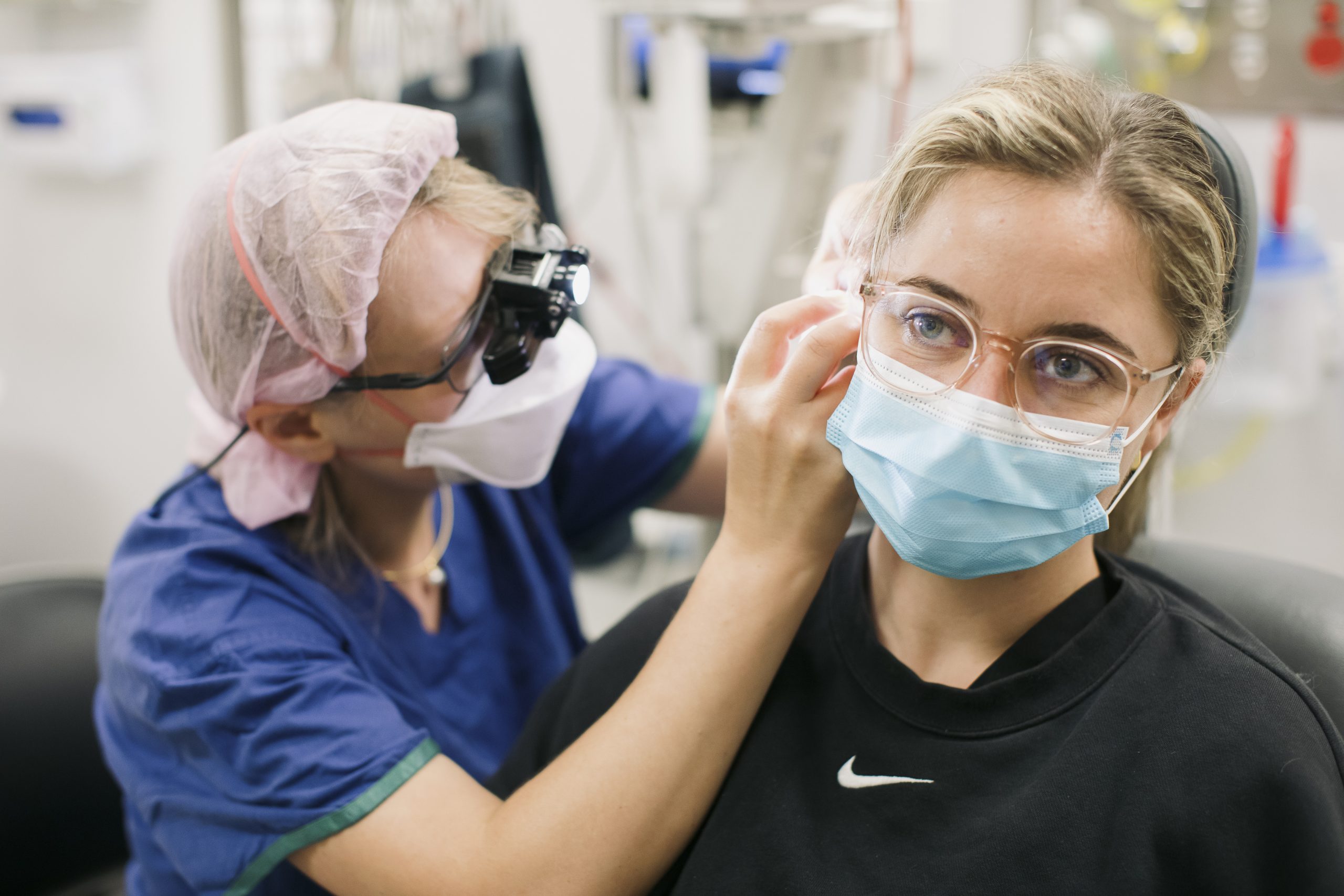
Since the first paediatric cochlear implant in 1985, the treatment has become the standard intervention for children with severe-profound sensorineural hearing loss. Sensorineural hearing loss (SNHL) results from damage to cells or nerve fibers in the inner ear. As cochlear implants have become a more prominent option, the average age of implantation in Australia has steadily reduced.
“The evidence for paediatric cochlear implantation is very clear: early implantation leads to better hearing and language development outcomes,” says Dr Jaime Leigh, a Senior Clinician at The Royal Victorian Eye and Ear Hospital’s Cochlear Implant Clinic.
Dr Leigh led the development and establishment of the Victorian Cochlear Implant Program and is now the program’s Clinical Lead. With more than 20 years’ experience in the cochlear implant field, she is one of Australia’s foremost experts.
“Cochlear implants can be life-changing and now the key issue is timely assessment and diagnosis. We needed to develop a system for more efficiently evaluating younger patients without compromising our evidence-based practice.”

Behavioural testing is widely considered the gold standard for the audiometric evaluation of babies. The primary test, called visual reinforcement audiometry, measures a child’s capacity to notice and respond to a sound. However, it cannot be applied before six months of age and is often unreliable as late as 10 or 11 months of age.
For infants with SNHL, this delay can be detrimental. “Hearing is vital for spoken language development in those critical early months of life,” explains Dr Leigh. “Any delay in hearing can have ripple effects throughout childhood.”
Dr Leigh and her colleagues undertook a retrospective study that delved through five years of data from the Victorian Cochlear Implant Program to examine the relationship between results from early diagnostic audiology and subsequent behavioural audiology.
The result of their research is an evidence based protocol for evaluating infants’ suitability for cochlear implants within the first six months of life. The new framework collates the results from several tools which, in combination, can support a cochlear implant recommendation. The streamlined process will improve access to cochlear implants for infants and their families, reduce the number of appointments required for evaluation and result in earlier cochlear implantation.
“Many of the tools available to us when evaluating young infants only provide estimates of hearing loss, so we need to combine several tests to get a comprehensive picture. We’re looking at audiological tests that measure brain activity in response to sound, as well as parental evaluations and observational consultations with speech pathologists.”
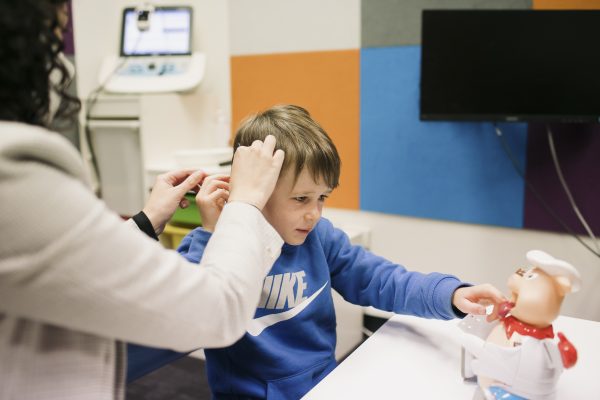
Dr Leigh highlights that the study’s recommendations have already been implemented into clinical practice at the Eye and Ear’s Cochlear Implant Clinic.
“This research will have an immediate, tangible impact on how we evaluate paediatric cochlear implant candidates. That should be the ultimate goal of all healthcare research: to improve clinical practice and lead to better care for patients.”
This story is an excerpt from our Innovate 2023-2024 publication which you can view here.